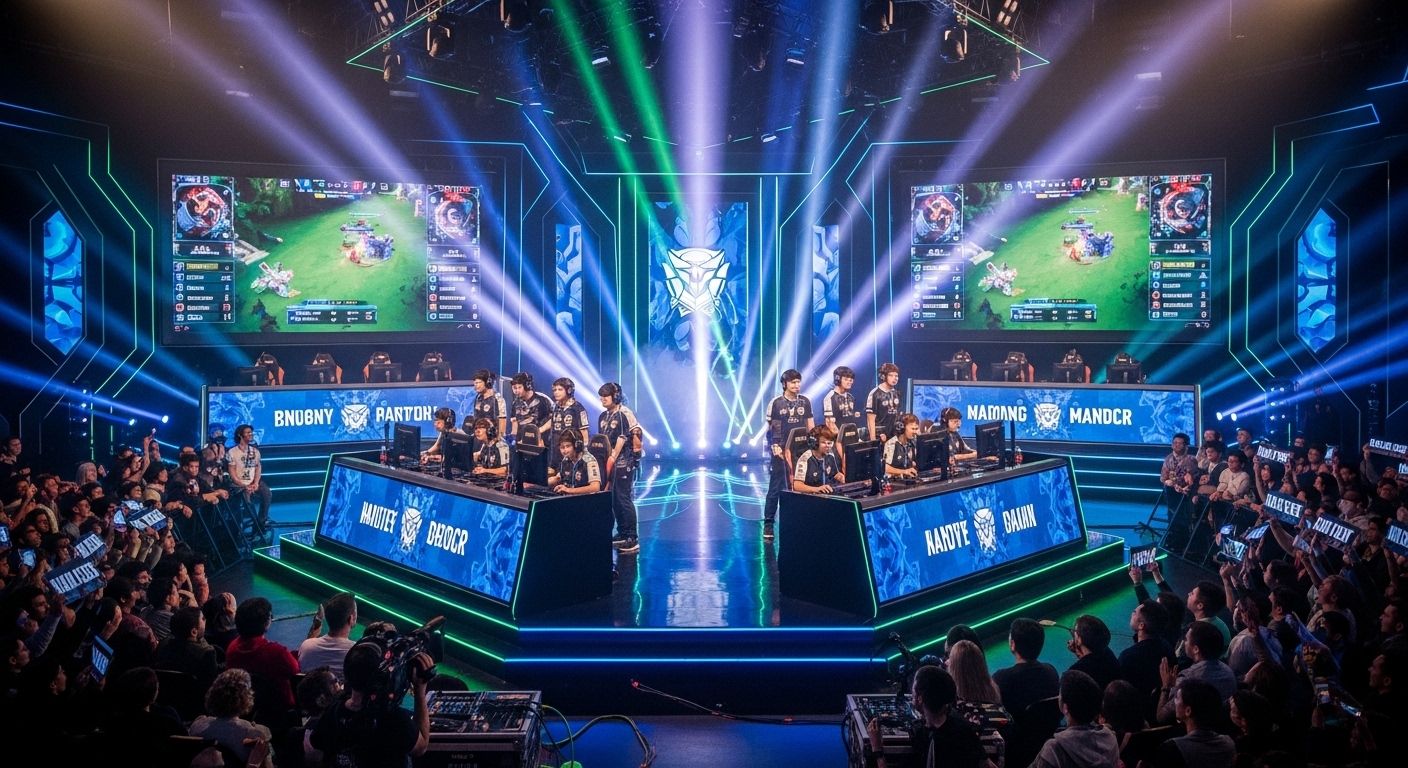

In the last two decades, the world of esports has transformed from a niche subculture into a multi-billion-dollar global industry. Competitive video gaming, once considered a hobby for a small group of enthusiasts, now attracts millions of fans, investors, and even mainstream media attention. With its huge prize pools, global tournaments, and professional teams, esports is rapidly becoming a major force in the entertainment world, rivaling traditional sports like football, basketball, and soccer.
This post will explore the incredible rise of esports, the driving forces behind its growth, the major games and tournaments that dominate the scene, and what the future holds for competitive gaming as it continues to evolve.
What Is Esports?
Esports, short for “electronic sports,” refers to organized, multiplayer video game competitions, particularly between professional players, individually or as teams. Esports includes a wide range of genres, from real-time strategy games (RTS) to first-person shooters (FPS), multiplayer online battle arenas (MOBAs), and battle royale games. These games are played in high-stakes tournaments where players and teams compete for massive cash prizes, sponsorships, and global recognition.
Unlike casual gaming, where players engage with games for fun or leisure, esports requires a high level of skill, strategy, and teamwork. Professional players often dedicate their lives to mastering their chosen games, training for hours each day to perfect their technique and outsmart their opponents.
The History and Evolution of Esports
The origins of esports can be traced back to the early 1970s, with the first video game competitions taking place on university campuses and at gaming conventions. However, it wasn’t until the late 1990s and early 2000s that esports began to gain significant traction. Games like StarCraft and Quake sparked the first wave of competitive gaming, with regional tournaments and leagues emerging in countries like South Korea, where esports became a mainstream form of entertainment.
By the mid-2000s, the competitive gaming scene expanded beyond small LAN (Local Area Network) parties and online competitions. Games like Warcraft III, Counter-Strike, and League of Legends began to dominate the competitive landscape, and large-scale events started to attract thousands of spectators, both in-person and online.
The real breakthrough for esports came with the rise of streaming platforms. In 2011, Twitch was launched, and it quickly became the go-to platform for gamers to broadcast their gameplay to global audiences. The ability to stream tournaments in real-time allowed esports to reach an unprecedented number of viewers, turning local events into global spectacles.
By the 2010s, major esports organizations, sponsors, and even traditional sports teams began to invest in esports, further legitimizing the industry. Esports became more professional, with players being treated like athletes, complete with sponsorship deals, coaching staffs, and media appearances.
Factors Driving the Growth of Esports
Several key factors have fueled the explosive growth of esports in recent years. These include advancements in technology, the rise of streaming platforms, the increasing popularity of mobile gaming, and the growing acceptance of esports by mainstream audiences.
The Power of Streaming Platforms
Streaming platforms like Twitch, YouTube Gaming, and Facebook Gaming have been pivotal in bringing esports to a global audience. With millions of users tuning in to watch live broadcasts of esports events, these platforms have helped transform competitive gaming into a mainstream entertainment industry.
Twitch, for example, has become the epicenter of esports streaming, with over 140 million active monthly users as of 2023. The platform allows viewers to watch tournaments in real-time, interact with players and commentators, and become part of a global gaming community. The accessibility of these platforms has made it easier for fans to follow their favorite players, teams, and events, regardless of where they are in the world.
In addition to streaming tournaments, many esports players and influencers also use these platforms to connect with fans through regular streams, providing a more personal and interactive experience. These streams not only offer entertainment but also serve as a source of income for players and content creators through donations, subscriptions, and sponsorships.
The Rise of Mobile Gaming
While PC and console gaming have long been at the forefront of competitive gaming, the rise of mobile gaming has opened new doors for esports. Mobile games like PUBG Mobile, Arena of Valor, and Clash Royale have become some of the most-played titles worldwide, with millions of players engaging in competitive matches on their smartphones.
Mobile esports has been particularly successful in regions like Southeast Asia, where smartphones are more accessible than high-end gaming PCs or consoles. In fact, mobile esports tournaments now rival their PC counterparts in terms of viewership and prize money. PUBG Mobile, for example, has hosted tournaments with prize pools exceeding $2 million, attracting huge audiences from across the globe.
The accessibility of mobile gaming has also made it easier for aspiring professional players to break into the esports scene. Since mobile games can be played on relatively low-cost devices, a wider range of players can compete, leading to a more diverse pool of talent.
Mainstream Acceptance and Sponsorships
As esports has grown in popularity, it has garnered the attention of major brands, investors, and traditional sports organizations. Companies like Coca-Cola, Intel, Red Bull, and Nike have all invested heavily in esports, sponsoring events, teams, and individual players. These sponsorships have not only provided financial support but have also helped elevate the profile of esports, bringing it closer to the mainstream.
Traditional sports teams, such as those from the NBA, NFL, and soccer leagues, have also ventured into the esports world, either by creating their own esports teams or by partnering with existing organizations. This has helped to validate esports as a legitimate form of entertainment, attracting a wider audience and increasing its visibility.
Moreover, the increasing presence of esports in mainstream media—through televised tournaments, news coverage, and sports channels—has further solidified its status as a global phenomenon.
Popular Esports Titles and Tournaments
Esports spans a wide variety of genres, and each game has its own competitive ecosystem. Let’s take a closer look at some of the most popular esports titles and the major tournaments that define the competitive gaming landscape.
League of Legends (LoL)
Developed by Riot Games, League of Legends is one of the most successful and influential esports titles in history. This multiplayer online battle arena (MOBA) game has a massive global following, with millions of players and fans tuning in to watch its tournaments.
The pinnacle of LoL esports is the League of Legends World Championship, or Worlds, which is held annually and attracts millions of viewers. The 2020 Worlds finals, for instance, peaked at over 3.8 million concurrent viewers. The prize pool for Worlds is typically over $2 million, and the event is broadcast in multiple languages, drawing attention from esports enthusiasts around the world.
Dota 2
Another major player in the esports world is Dota 2, developed by Valve. Like League of Legends, Dota 2 is a MOBA game, but it’s known for its complexity and high skill ceiling. The game’s premier event, The International (TI), is one of the most prestigious esports tournaments in the world, with a prize pool that often surpasses $30 million, much of which is crowdfunded by the community.
The 2018 TI tournament set a record for the largest esports prize pool in history, with over $25 million at stake. Dota 2 continues to be a favorite among competitive players, with its intense, strategic gameplay and high-stakes tournaments attracting millions of viewers.
Counter-Strike: Global Offensive (CS:GO)
Counter-Strike: Global Offensive (CS:GO) is one of the most enduring first-person shooters in the esports world. Developed by Valve and Hidden Path Entertainment, CS:GO features fast-paced, tactical gameplay where teams of terrorists and counter-terrorists compete to complete objectives like planting or defusing bombs.
CS:GO has a long-standing esports scene, with major tournaments like the CS:GO Major Championships drawing huge audiences. The prize pools for these tournaments are often in the millions of dollars, and the competition is fierce. The CS:GO Major tournaments are considered some of the most prestigious in the FPS genre, with teams from around the world vying for the title of world champion.
Fortnite
Epic Games’ Fortnite is a battle royale game that has taken the world by storm, attracting millions of players and fans. The game’s combination of building mechanics, strategic gameplay, and fast-paced action has made it a favorite among both casual players and esports professionals.
Fortnite has become a staple in the esports world, with tournaments like the Fortnite World Cup offering multi-million-dollar prize pools. The 2019 Fortnite World Cup had a prize pool of $30 million, with the winner, 16-year-old Kyle “Bugha” Giersdorf, taking home $3 million. Fortnite’s accessibility, combined with its exciting gameplay, has made it a mainstay in the competitive gaming scene.
The Future of Esports
The future of esports is filled with potential. As technology continues to advance, esports will likely become even more immersive and engaging. Virtual reality (VR) and augmented reality (AR) could transform the way esports are played and watched, offering players and fans new experiences.
Moreover, the growth of collegiate and amateur esports programs is helping to develop the next generation of esports talent. As more universities and high schools establish esports programs, competitive gaming will continue to grow in popularity and professionalism.
Esports is also poised to become even more integrated with traditional sports. We could see more partnerships between esports organizations and major sports leagues,