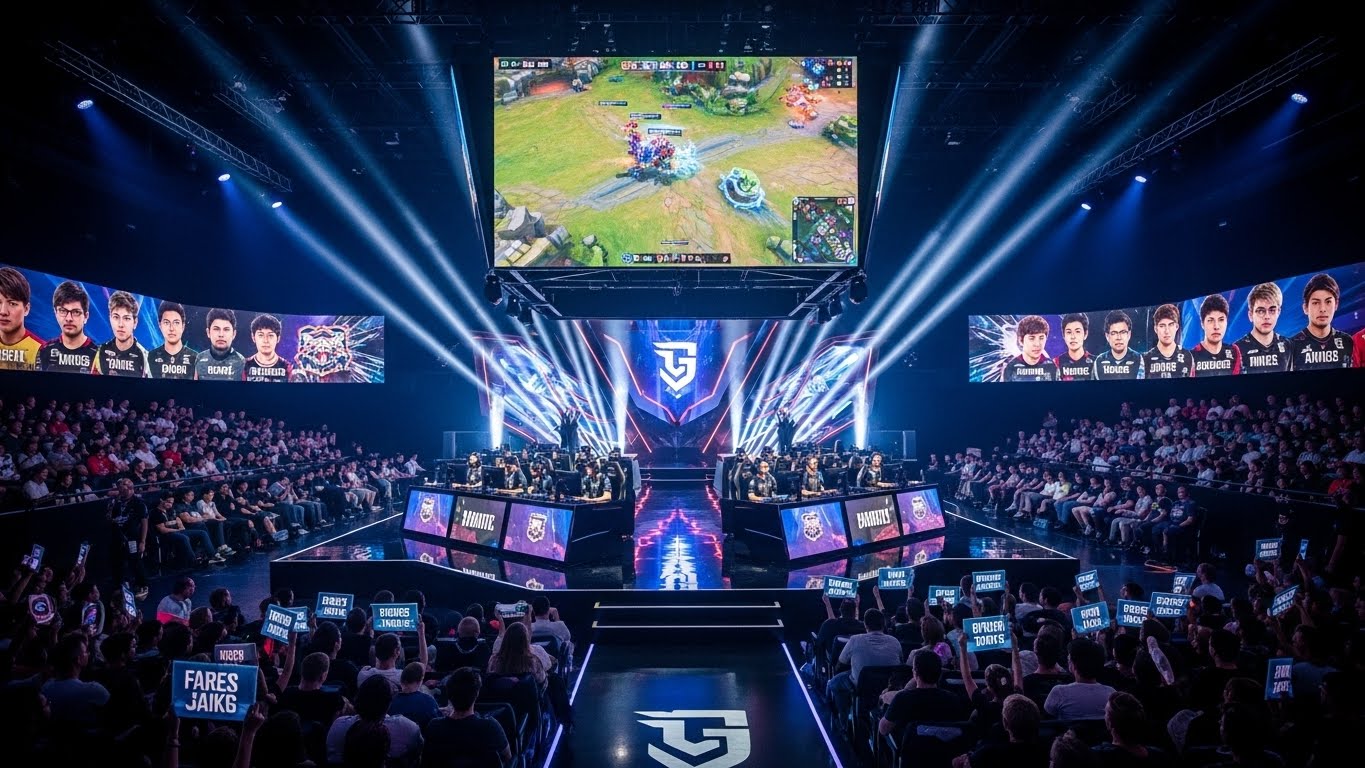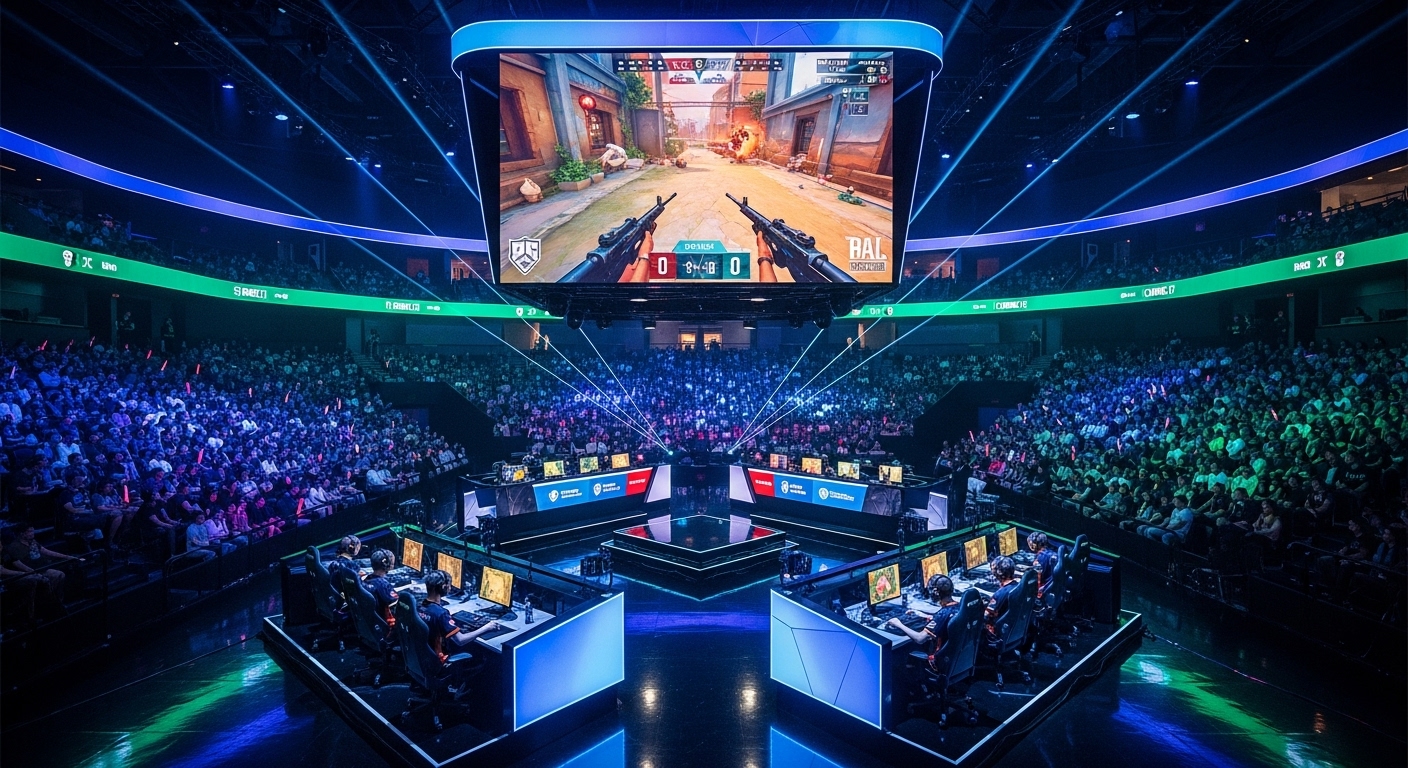
Imagine slipping on a VR headset and instead of watching a flat stream, you are standing at the center of an esports arena. You can walk around players, view replays from any angle, and feel like part of the match. Now picture a physical arena where competitors run across a lit stage, while the crowd sees both their real bodies and digital avatars projected above them.
This is the promise of VR arenas. They combine virtual reality, mixed reality, and physical spaces to create a new way of both playing and watching esports. For fans, it means more presence, more control, and more interaction. For organizers and brands, it means fresh opportunities for business and engagement.
What is a VR Arena?
A VR arena can mean different things. In one form, it’s a location-based venue where people put on headsets and compete in free-roam environments. In another form, it’s a virtual stadium where global audiences gather as avatars to watch live matches.
Sometimes it’s both at once: a hybrid event where players compete in a physical arena, while the gameplay is projected in 3D for audiences both in the venue and online. These spaces are more than just stages; they’re platforms where esports becomes an immersive show.
Why VR Matters for Spectators
Esports has always been about spectacle. Broadcasts, replays, and live events borrow from traditional sports. But VR goes further. Instead of watching a game through fixed camera angles, fans can explore it themselves.
Spectators can “stand” on the battlefield, move their viewpoint, or join friends as avatars in a shared viewing space. Watching esports in VR creates a stronger feeling of being there. Fans don’t just consume content — they participate in it.
The Technology Behind VR Spectating
Several technologies are driving this new wave of esports viewing:
- Free-roam VR tracking: Players move in real spaces mapped to virtual worlds. This makes gameplay physical and exciting to watch.
- Volumetric capture: Matches can be recorded in 3D, allowing fans to re-watch plays from any angle.
- Low-latency cloud streaming: High-speed servers make it possible to watch VR broadcasts in real time.
- Social VR platforms: Fans gather as avatars, cheer, talk, and interact during matches.
- Mixed reality overlays: Real arenas project health bars, stats, or avatars, blending the digital and physical.
Together, these tools make esports look and feel very different from traditional screen-based viewing.
How Spectator Experience Changes
- Interactive Replays
Instead of being limited to one replay angle, fans can explore big moments. They can circle a clutch play, zoom in on player movements, or watch from any perspective. - Social VR Watch Parties
Fans no longer need to sit alone in front of a monitor. In VR, they can attend a virtual stadium with friends, buy digital seats, and feel like they are cheering side by side. - Hybrid Live Shows
In physical VR arenas, audiences can see both real players and digital overlays. Health bars, spell effects, and holograms make the live event more cinematic and thrilling.
Business Models for VR Esports
VR opens new ways to make money:
- Virtual ticket sales: Fans pay for premium “seats” in virtual stadiums.
- Immersive sponsorships: Brands sponsor replays, camera angles, or virtual billboards.
- Arena ticketing: Location-based VR centers sell tickets to live events.
- Digital collectibles: Fans can own highlight moments, skins, or avatars tied to events.
- Memberships: Local VR arenas offer subscriptions for weekly competitions or fan nights.
These models make esports more profitable and interactive for fans and investors alike.
Challenges Ahead
Even with its potential, VR spectating faces hurdles.
- Clarity: Too many angles or effects can overwhelm viewers. Broadcast teams need to design clean and understandable feeds.
- Latency: Matches must stream without delay, or fans lose immersion.
- Hardware access: Not everyone owns a VR headset. Events must also offer 2D or mobile-friendly versions.
- Cost: Volumetric capture and VR production are expensive. Cheaper tools are needed for smaller tournaments.
- Comfort: Poor design can cause motion sickness for some viewers.
These challenges are solvable but require careful planning and steady investment.
How Communities Will Change
VR will reshape fan culture in powerful ways.
Fans will become active spectators. Instead of passively watching, they’ll explore matches, share custom replays, and even build highlight libraries.
Local VR arenas will also become community hubs. Just as sports bars and stadiums brought fans together, VR arcades will host regular competitions and watch parties, keeping esports social and lively.
Finally, new talent roles will emerge. Beyond players and casters, VR events will need spatial directors, replay hosts, and even avatar choreographers to guide fans through interactive experiences.
Early Signs of the Future
We can already see hints of this future today. VR esports leagues are running competitive tournaments. Location-based VR franchises are offering team-based competitions and community events. Some sports clubs have even experimented with VR “seats” to let fans attend matches remotely.
These small pilots show what is possible. As costs drop and fan demand grows, larger events will adopt VR broadcasting on a global scale.
Roadmap for Organizers
If you want to test VR spectating, start small:
- Host a virtual watch party in a social VR space.
- Add interactive replays to your broadcast highlights.
- Run a hybrid event with both physical and virtual overlays.
- Collect feedback, track engagement, and refine the experience.
- Expand to larger events once you’ve proven fan interest.
This step-by-step approach reduces risk while building expertise in immersive production.
Obstacles to Mass Adoption
Mass adoption won’t happen overnight. Headset ownership is still limited, production is expensive, and not all fans understand VR grammar yet. But history shows that costs fall and habits evolve.
When esports first started, many doubted people would watch others play video games. Today, esports audiences rival traditional sports. VR spectating could follow the same path, moving from niche to mainstream as technology matures.
Two Possible Futures
- Local VR Hubs
Communities gather in VR arenas for weekly competitions and live events. These hubs act like sports clubs, fueling grassroots esports culture. - Global Virtual Stadiums
Major tournaments build massive online stadiums. Fans worldwide attend in VR, buy premium seats, and interact with players and brands in real time.
Both futures are likely to grow together, feeding each other in different ways.
Why This Matters
Esports has always evolved through new technology. VR arenas represent the next leap. They will change how fans experience matches, how teams engage with their audiences, and how brands create sponsorships.
The future of spectator esports will not be about bigger screens or louder commentary. It will be about creating immersive worlds where fans feel present, social, and active.